Cost caps and bid caps: how to set them without choking delivery
A cost cap holds your average cost per purchase. A bid cap limits each auction bid. Both stop spending when the number in them comes from a wish rather than your margin.
On this page
Every sales campaign on Meta starts on highest volume. Meta spends the whole budget and gets as many purchases as it can, at whatever they cost that week. A cost cap or a bid cap tells it where to stop. Set one well and it holds your cost per purchase while you scale. Set it from a wish rather than a sum and the ad set stops spending.
The names have changed, too. What most people still call a cost cap is now the cost per result goal in Ads Manager, the old minimum ROAS bid is the ROAS goal, and bid cap is still bid cap. Here’s what each one controls, how we work out the number, why capped ad sets stall, and what changes as CPMs climb into Black Friday.
The short version
- A cost per result goal controls your weekly average cost. A bid cap controls the most Meta bids in any one auction, which isn’t what you pay.
- Set the number from your margin first, then from your recent cost. Start 10% to 20% above your recent cost per purchase, and never above break-even.
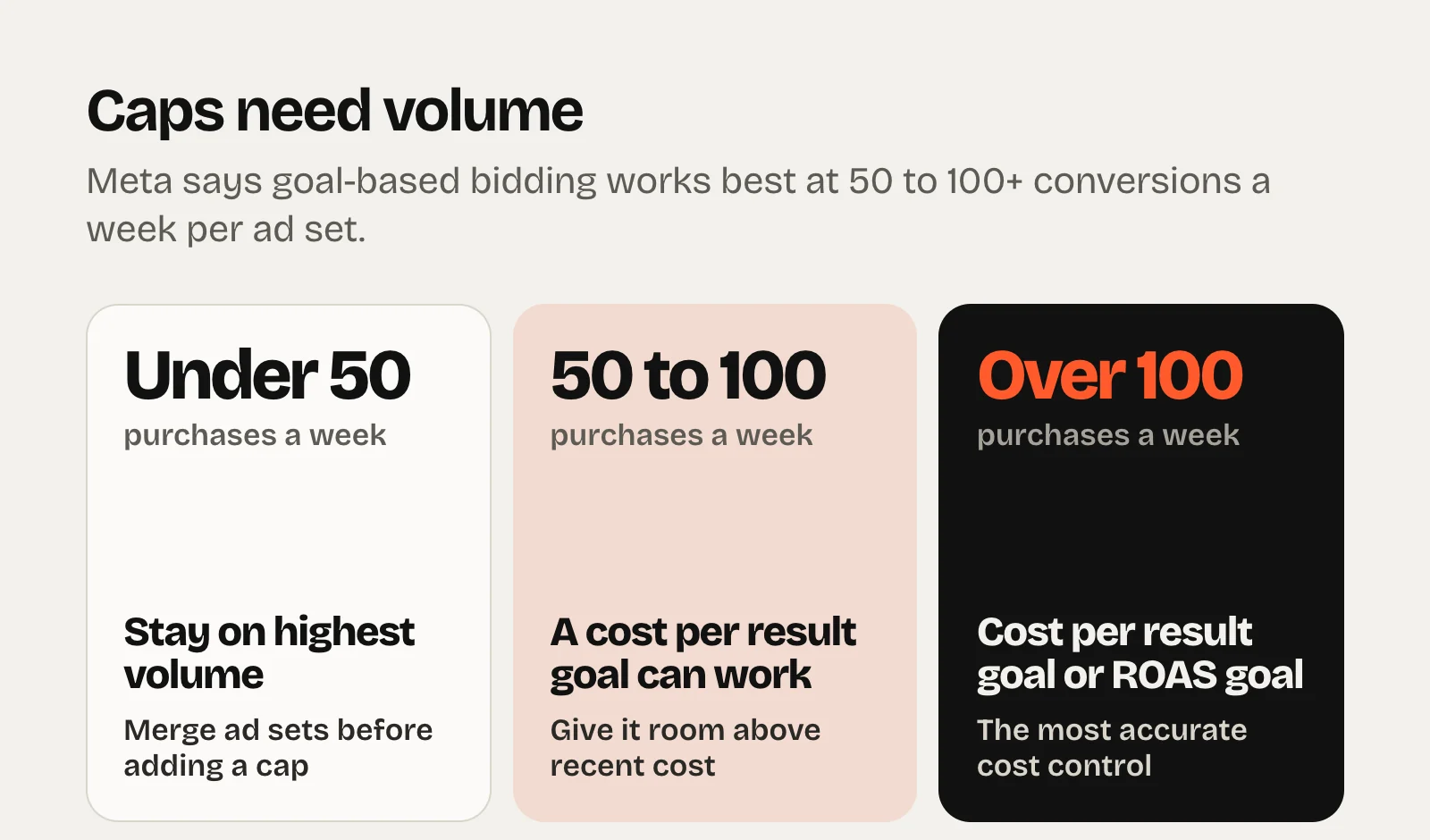
- Caps need volume. Meta says they work best with 50 to 100 or more conversions a week per ad set.
- Change a cap once a week, by 5% to 10%, and judge it on the week, not the day.
The four bid strategies, in Meta’s words
Meta’s page About bid strategies now sorts them into three kinds:
- Spend-based: highest volume, or highest value if you optimise for purchase value. Meta spends the full budget and doesn’t promise a cost.
- Goal-based: cost per result goal and ROAS goal. Meta aims for your target on average, and will spend less than your budget to protect it.
- Manual: bid cap. You set the most Meta can bid in any single auction.
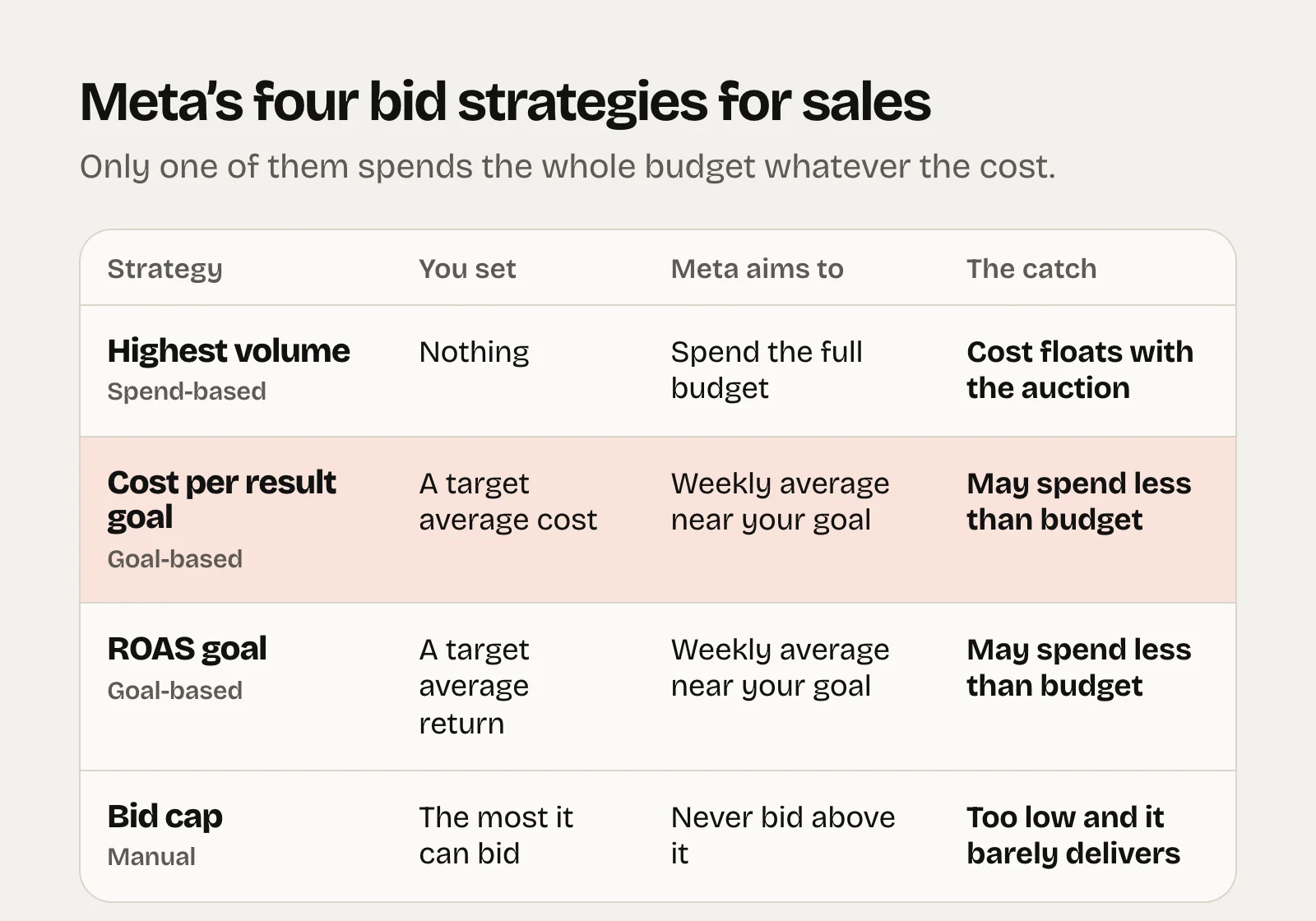
Each campaign uses one bid strategy. With a campaign budget, you choose it on the campaign and set the amount on each ad set. With ad set budgets, typing a cost amount into the ad set switches it to a cost per result goal, and bid cap sits under Show more options. Leave the box empty and you’re on highest volume.
Average or ceiling: what each cap controls
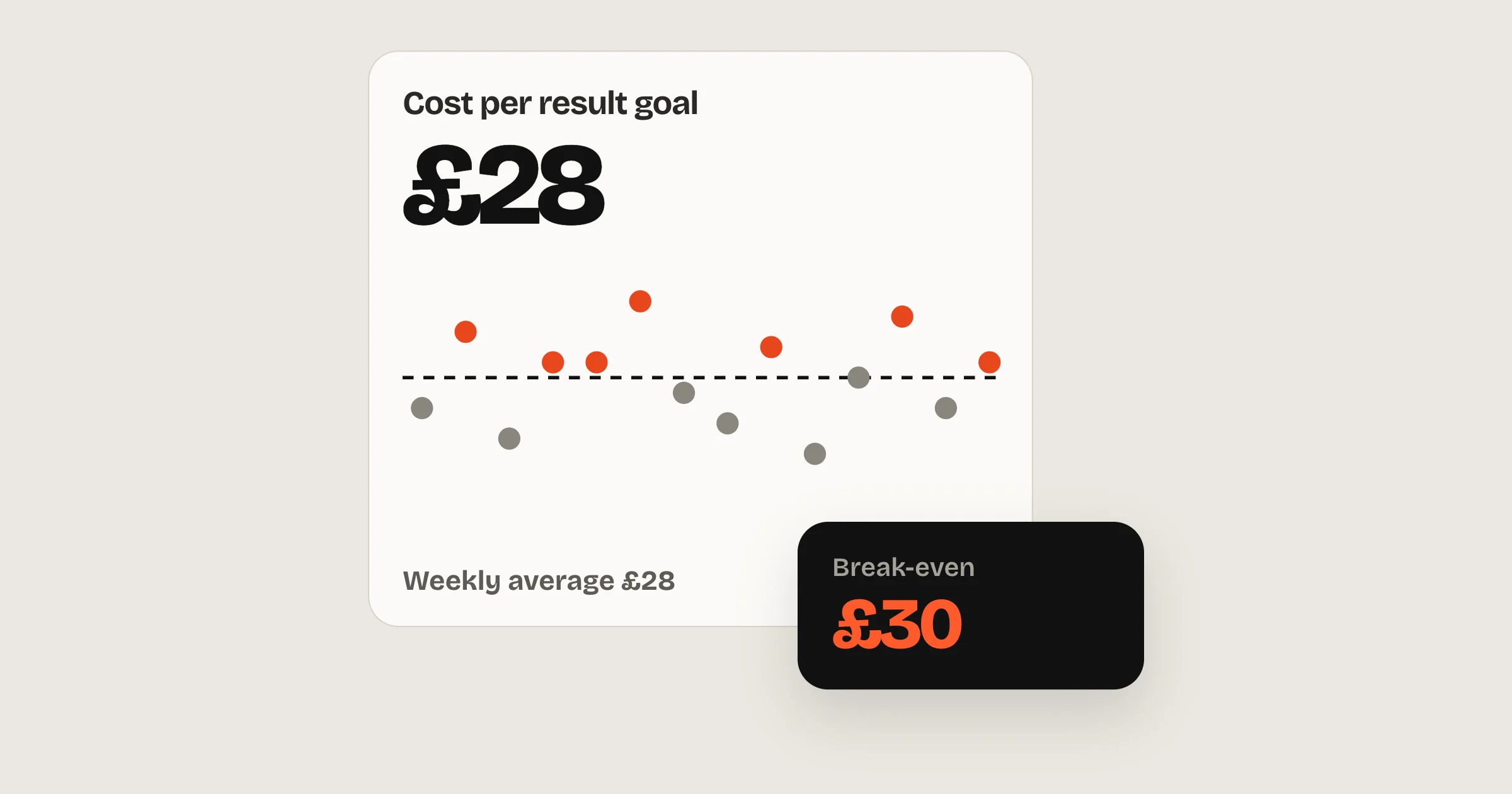
The cost per result goal works on an average. Meta bids higher on some auctions and lower on others to keep the weekly average near your goal. Its page About cost per result goal says to judge it on weekly averages, because daily costs swing. The ROAS goal does the same with return.
A bid cap works on every auction. In Meta’s words on About bid cap, the bid is your bid per estimated action multiplied by the estimated action rate, and the cap limits the first part. It caps what Meta offers to pay before anyone knows whether the purchase will happen. The cost per purchase in your reporting is a different number, and a low bid cap doesn’t guarantee a low one.
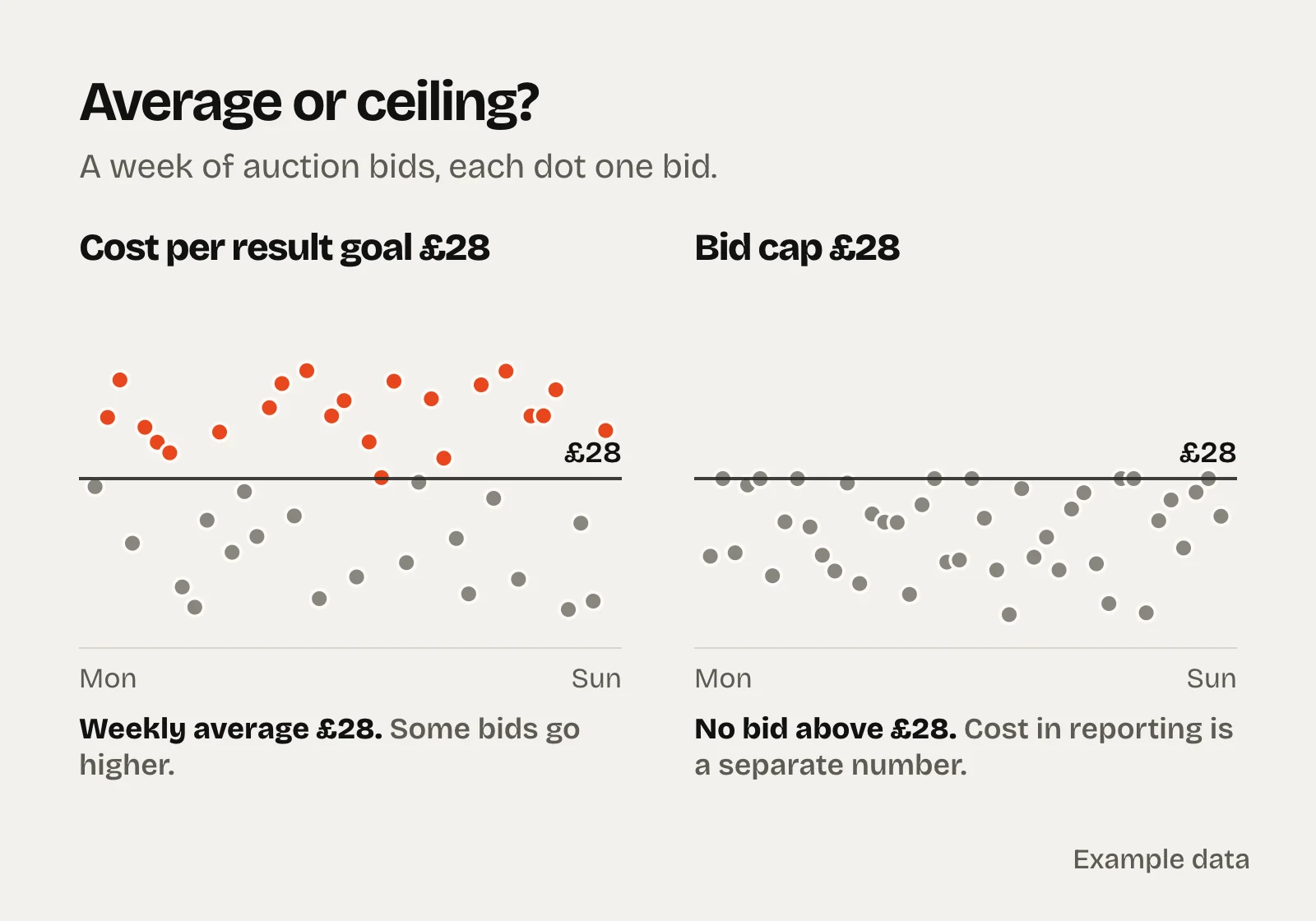
That’s why Meta points most advertisers to the cost per result goal for controlling costs, and keeps bid cap for those who can predict their conversion rates well enough to work out the bid themselves.
Start from what a purchase is worth
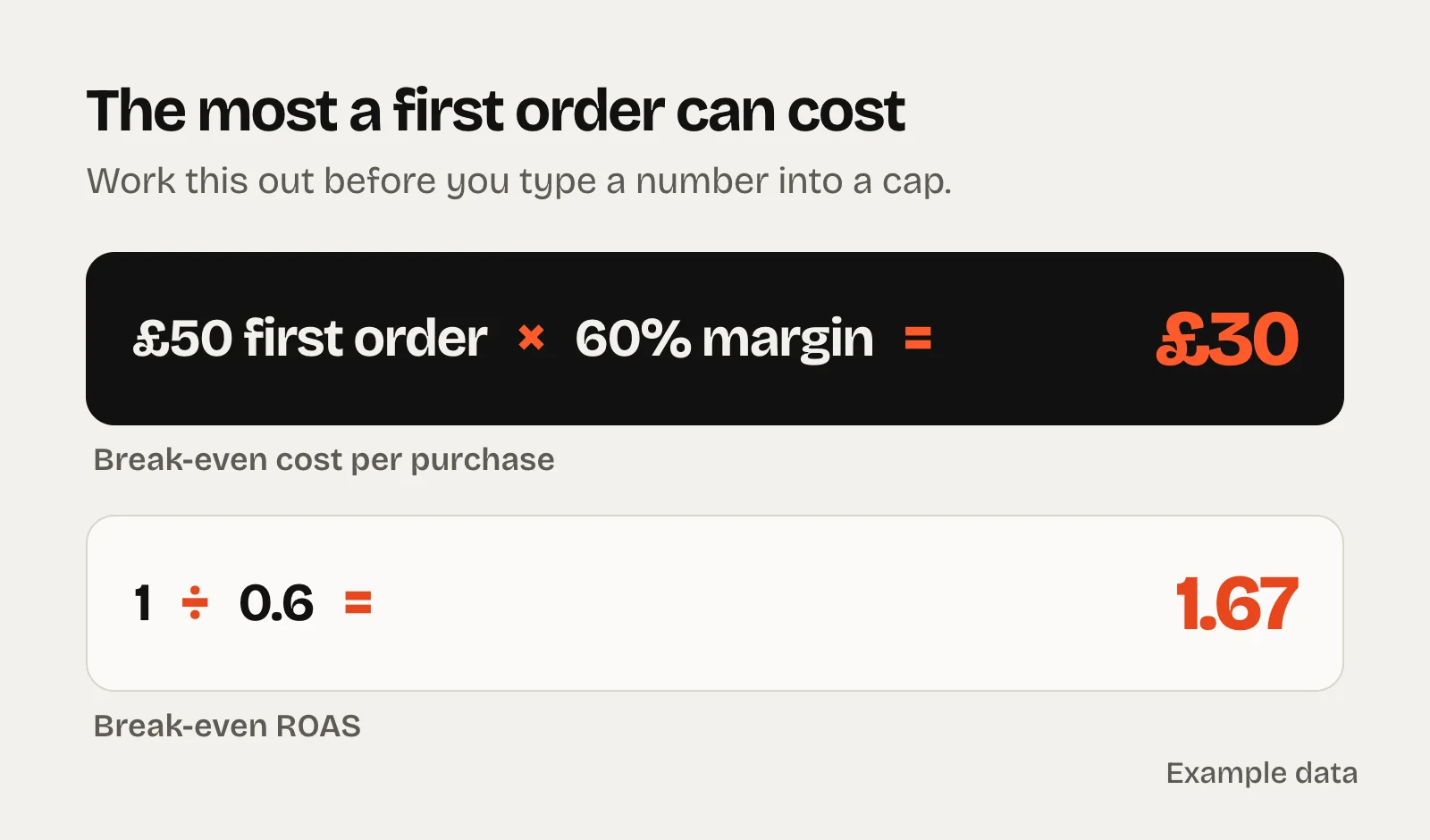
A cap is only as good as the number in it. Before we look at last month’s cost per purchase, we work out the most a first order can cost before it loses money:
Break-even cost per purchase = average first order × margin before ad costs
Break-even ROAS = 1 ÷ margin before ad costs
Margin here means what’s left of the order after product, delivery and payment costs, the same margin we use for offers and break-even ROAS. With a £50 first order and a 60% margin, break-even is £30 a purchase, or a ROAS of 1.67. If your own repeat data shows most customers order again, you can count some of the second order too. Only count what you’ve seen in your numbers.
Then we use Meta’s starting rule. Its best practices for cost per result goal say to start 10% to 20% above your average cost per result over the last 30 days, so a $20 cost per purchase becomes a $22 goal. For a ROAS goal, its ROAS page says to start 10% to 20% below your average ROAS. Use results within your attribution setting. With no history, run highest volume for two weeks first and start from what it costs.
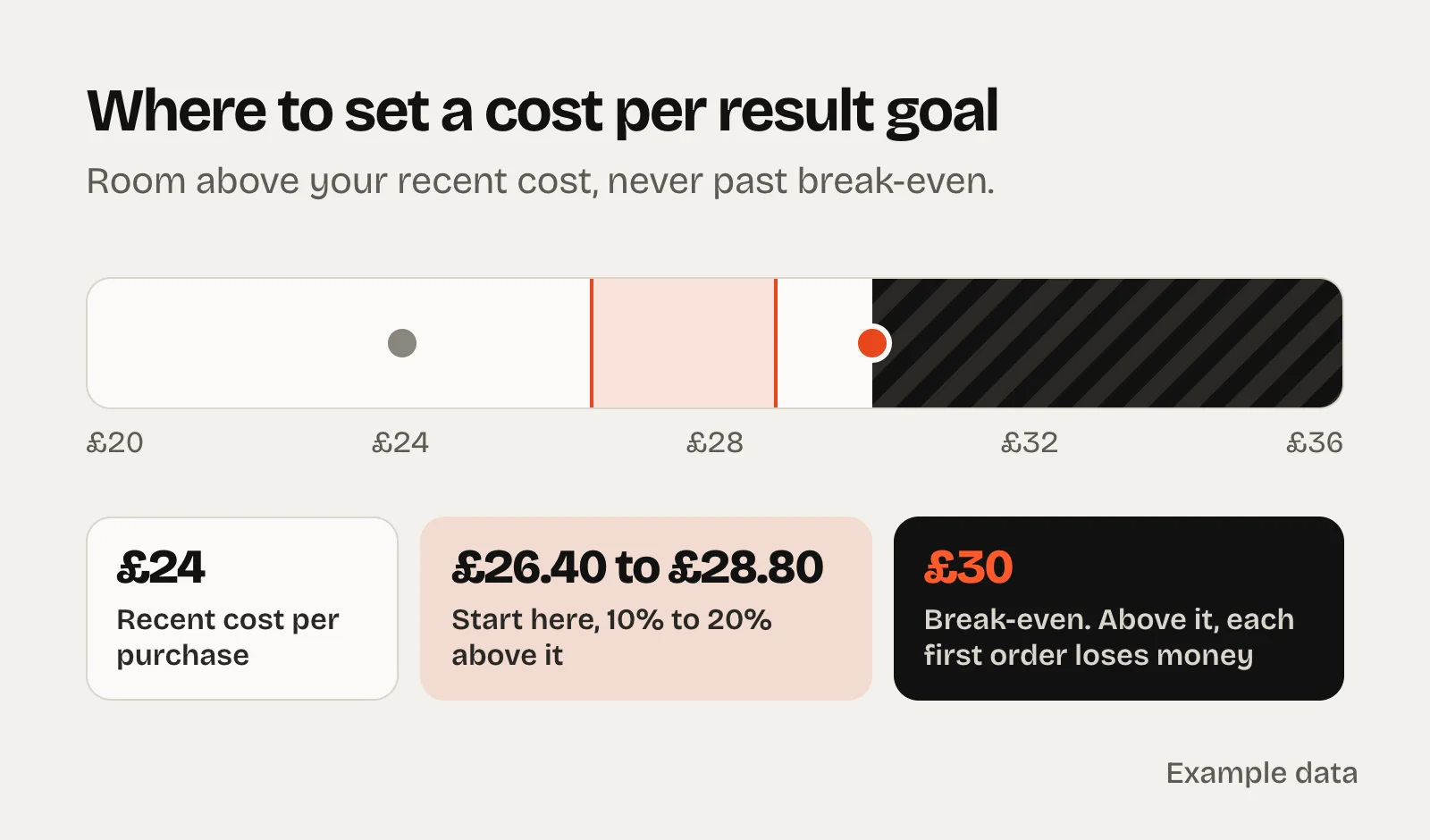
Break-even is the ceiling. If your recent cost plus 10% is already above it, a cap won’t fix the account. It will just stop it spending. The fix is in the ads, the offer or the page.
Meta’s bid strategy FAQ makes one more point worth keeping. Bidding low on audiences you expect to be cheap doesn’t make them cheaper, it just limits the auctions you can win. Set the goal at the most you can afford and let delivery find the cheap purchases.
Caps need volume
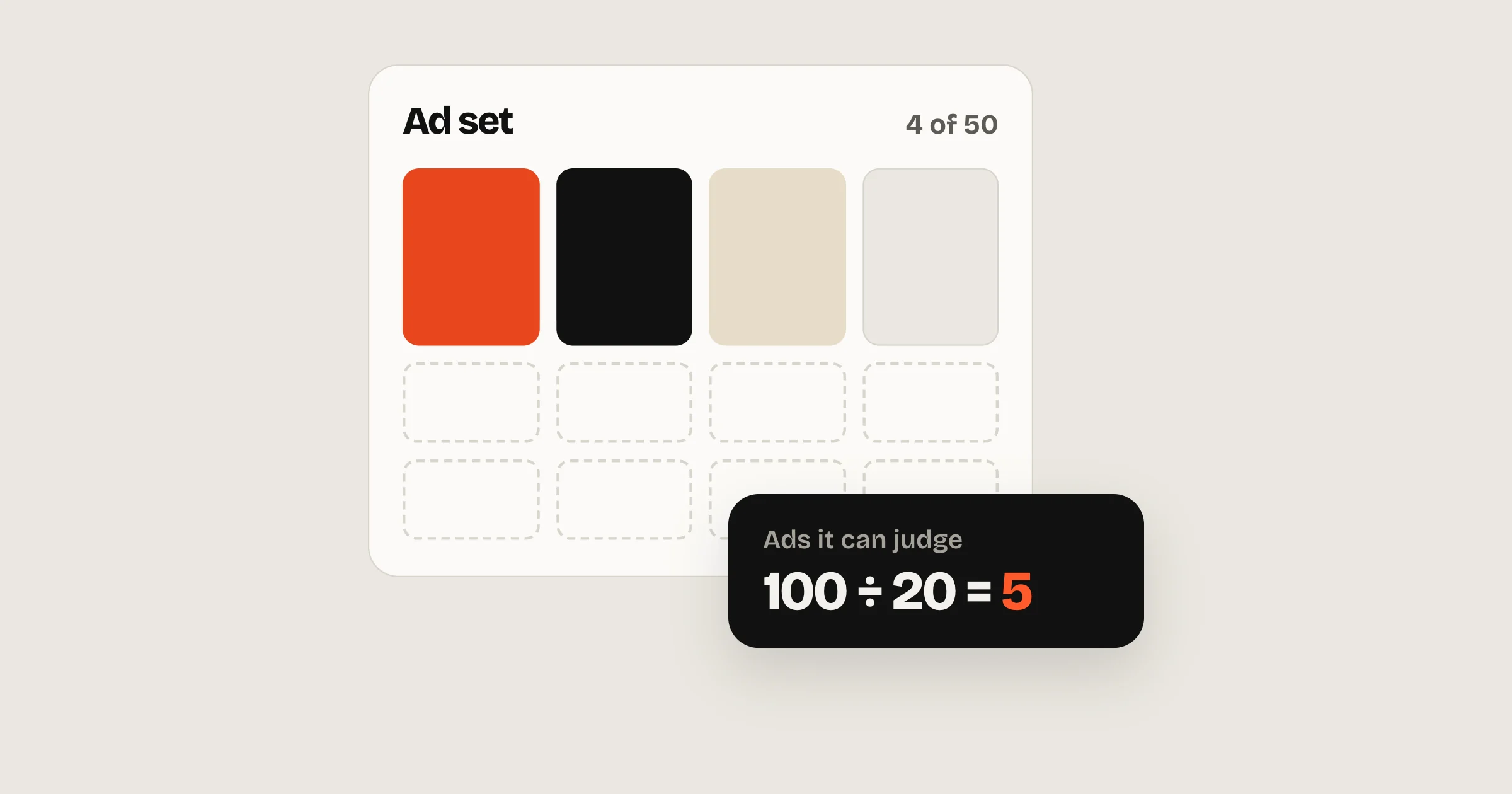
Meta says goal-based bidding works best when the ad set gets at least 50 to 100 conversions a week. Below that, it suggests a broader audience, a bigger budget or a higher goal. With 15 purchases a week there isn’t enough data to steer to an average, and one expensive day moves the whole week.
That’s one more reason to run fewer, bigger ad sets. The sum in our CBO vs ABO guide, weekly budget ÷ (cost per purchase × 50), tells you how many ad sets your budget can feed. A capped ad set should clear it comfortably.
Why capped ad sets stop spending
This is the trade you’re making. Meta says a cost per result goal may spend less than your full budget when the market is competitive, to protect your target, while highest volume spends the budget and lets the cost float. A bid cap set too low can limit delivery or stop it, and the ad set shows Bid limited in the Delivery column.
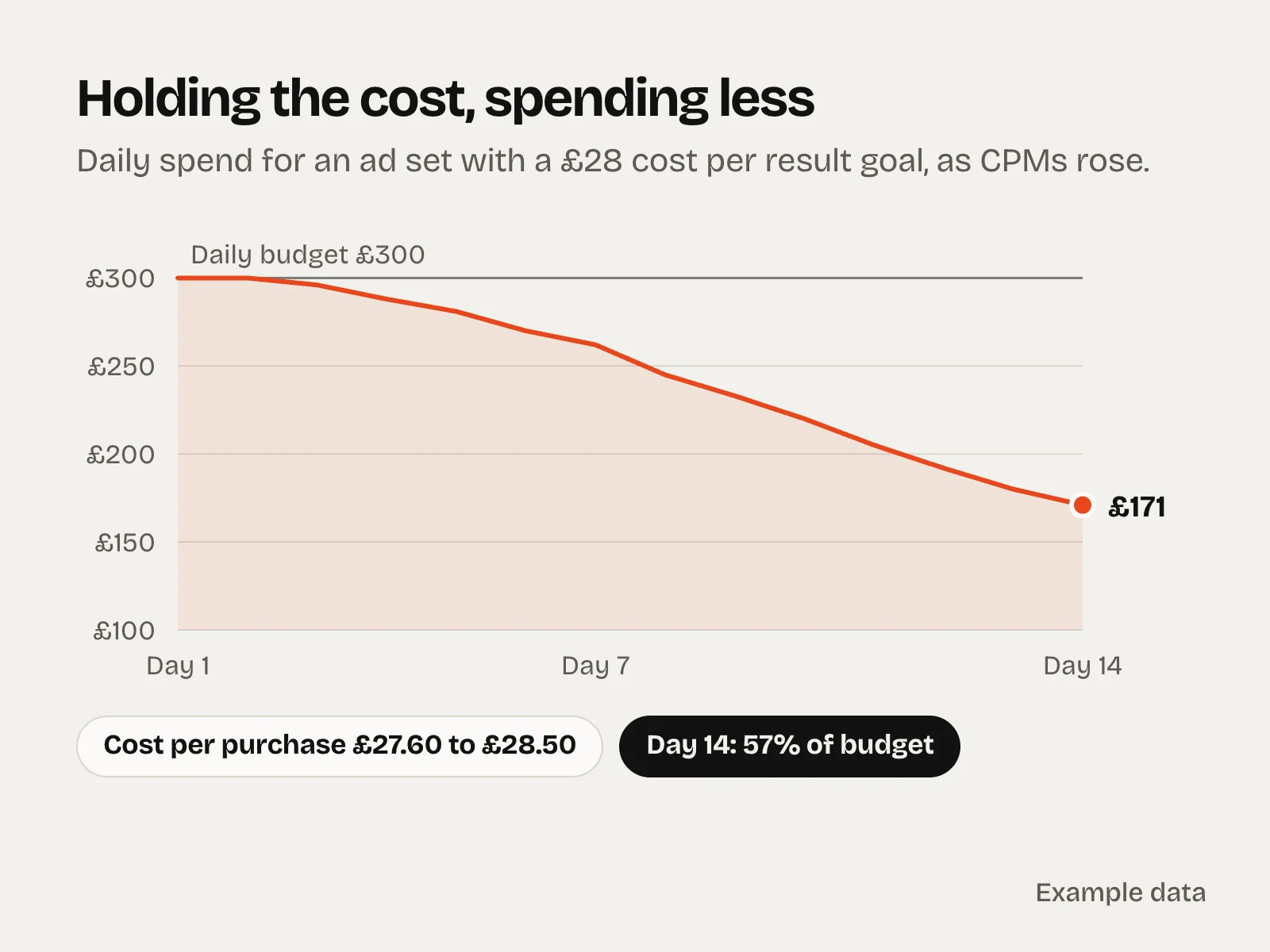
An ad set that holds its cost and spends 60% of its budget isn’t broken. It’s telling you how many purchases are on offer at that price this week. What to do depends on which of four situations you’re in, and Meta’s best practices cover each one:
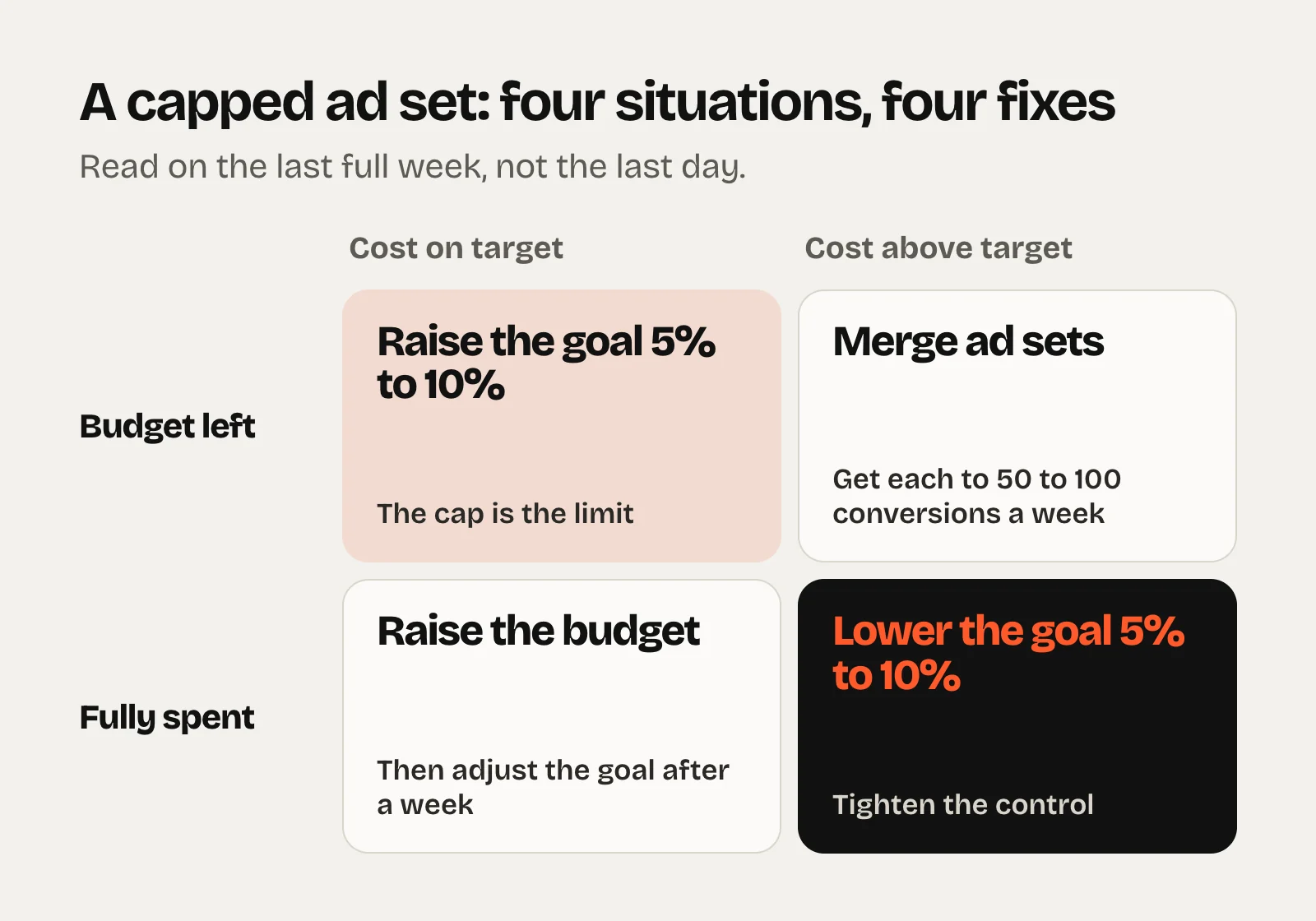
Before any of those, look at the ads. Meta lists new creative next to a higher goal and a broader audience as the ways to get more from a capped ad set. Estimated action rate is half of every bid, so an ad that converts better wins more auctions at the same cap.
Change the cap once a week
Changing bid strategy is a significant edit, so it sends the ad set back into learning. Changing the goal amount may or may not, depending on the size of the change, according to Meta’s page on significant edits. Meta’s advice is to wait at least seven days after any change before judging it, run a goal for three weeks before you scale, and only change bids after a week.
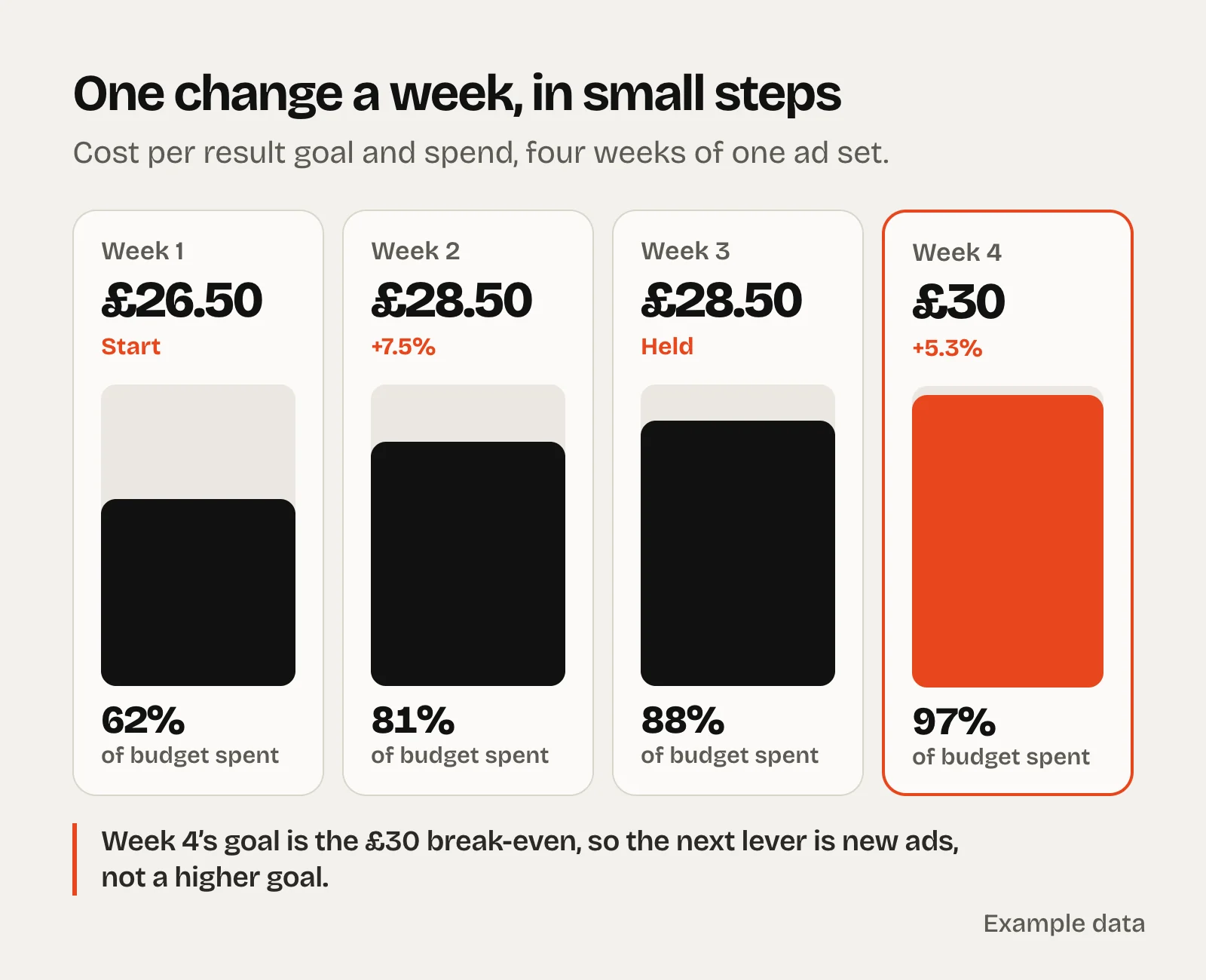
So we move caps in one weekly sitting, in steps of 5% to 10%, alongside the weekly batch of new ads from our ads per ad set guide. A goal that jumps from £27 to £40 to £25 in a fortnight never settles long enough to tell you anything.
When we use a bid cap
Rarely, and never to buy cheaper purchases. Meta’s own example is a skincare brand that loses money on any conversion over $40. Through testing it set a bid cap of $50, above the loss line, and found fewer days with conversions over $40 without losing much spend on other days. The cap sat above break-even, not below it. It guards against bad days.
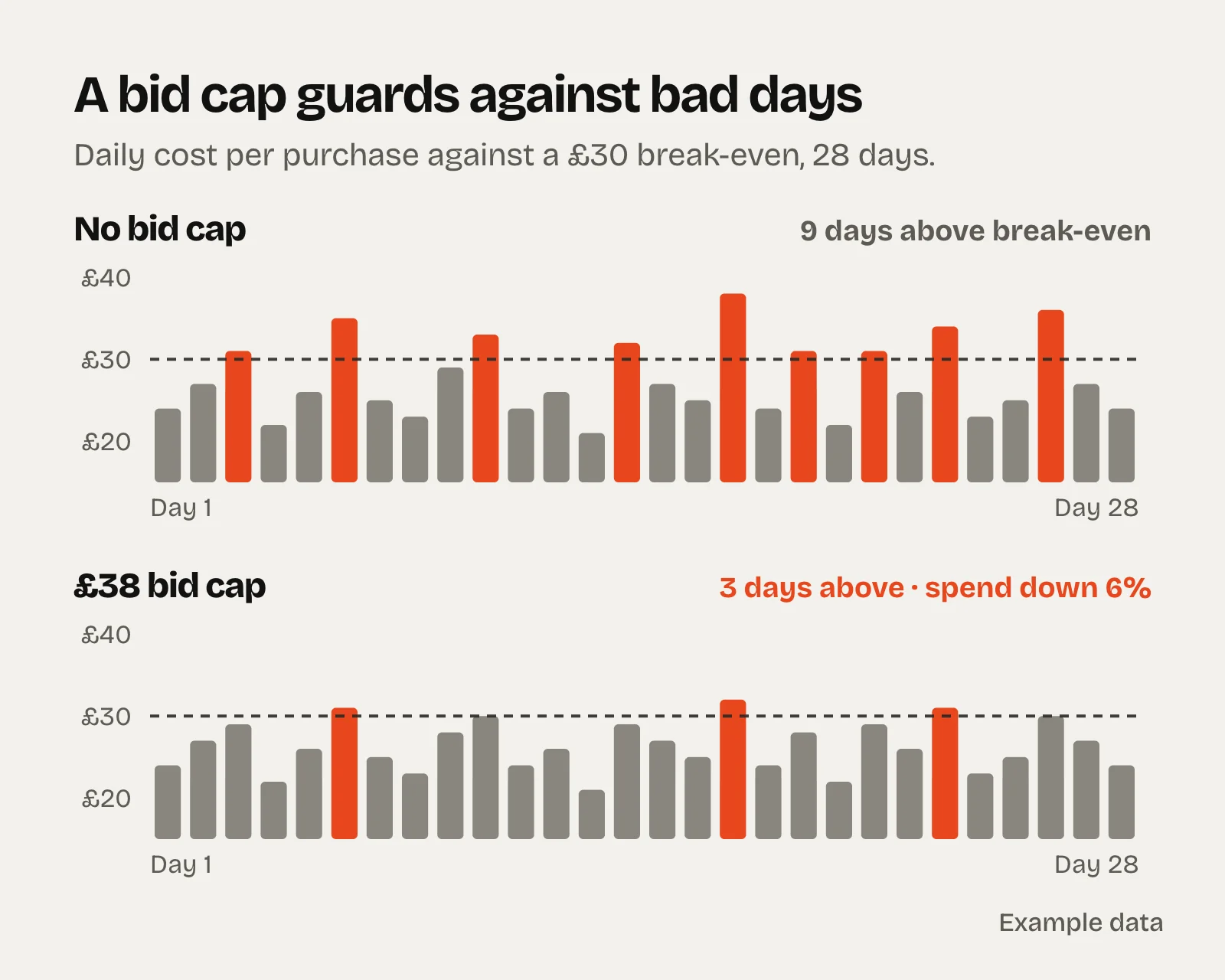
We use them for short windows where a hard ceiling matters more than volume, like a flash sale on a thin margin, and we set them from tested data, not guesses. Jon Loomer, who has written about Meta bidding for years, calls bid cap a tool for “the most advanced and adventurous advertisers” and runs most campaigns on highest volume. For most ecom accounts, we’d agree.
Caps at peak season
Peak moves both sides of the sum. Costs go up. Across $22.6m of Meta spend in Lebesgue’s data, median CPMs in Black Friday week 2025 ran 59% above September, and the rise began in the week of 10 November. If conversion rate doesn’t rise as fast, cost per purchase follows.
Break-even goes down if you discount. Take 20% off that £50 order and it brings in £40. With the same £20 product cost, £20 is left, so break-even falls from £30 to £20 while the same purchases cost more to buy.
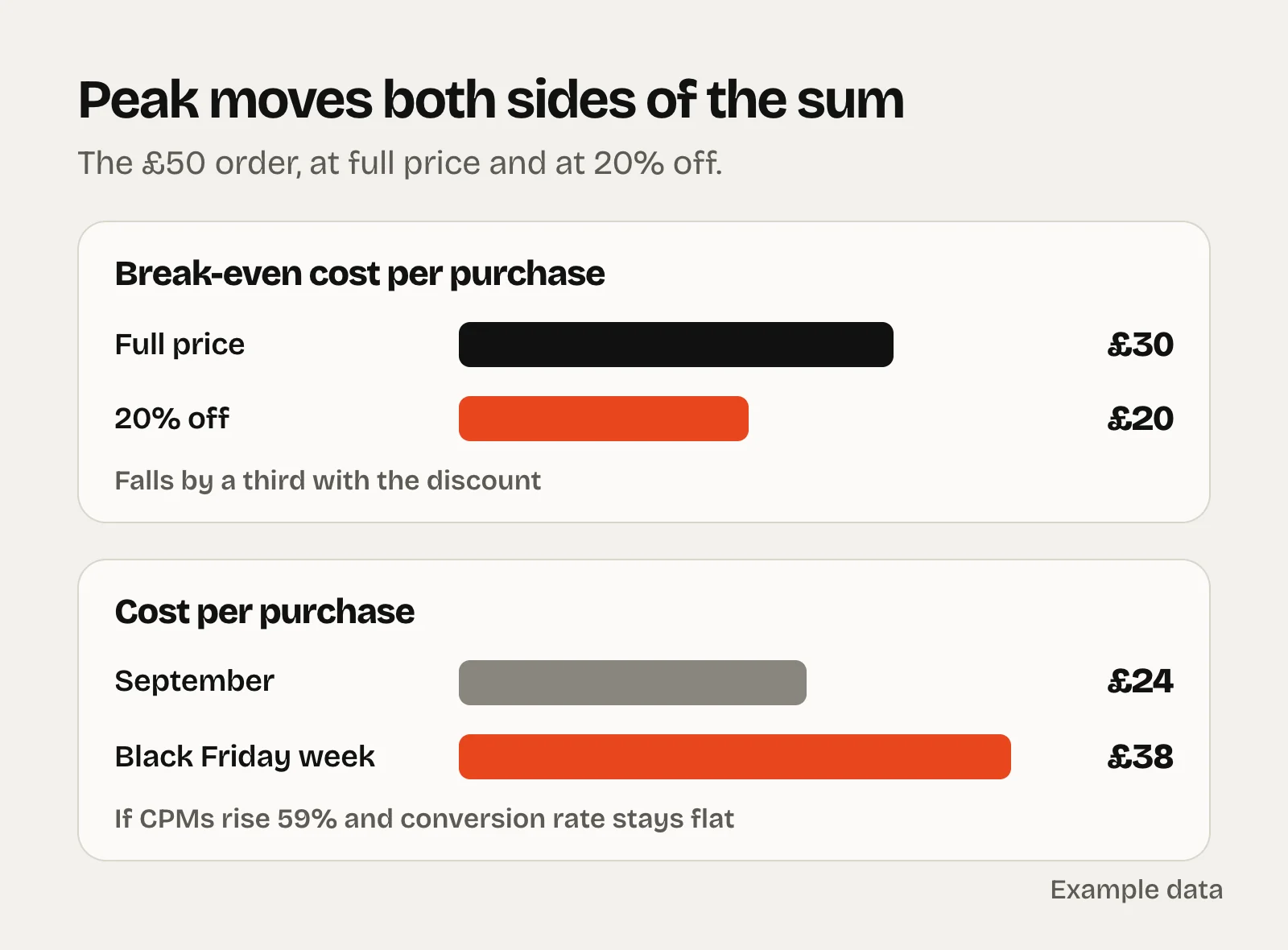
A goal set from October’s costs will hold spend back just as buyers are most active. One raised to match peak CPMs can buy discounted orders at a loss. We reset every goal from the offer’s own break-even before the sale starts, run the discount in its own campaign with its own goal, and accept that a capped discount ad set may spend less. If it can’t spend at break-even, the offer is the problem, and our offer guide covers which ones leave enough margin to bid on.
The setup we start from
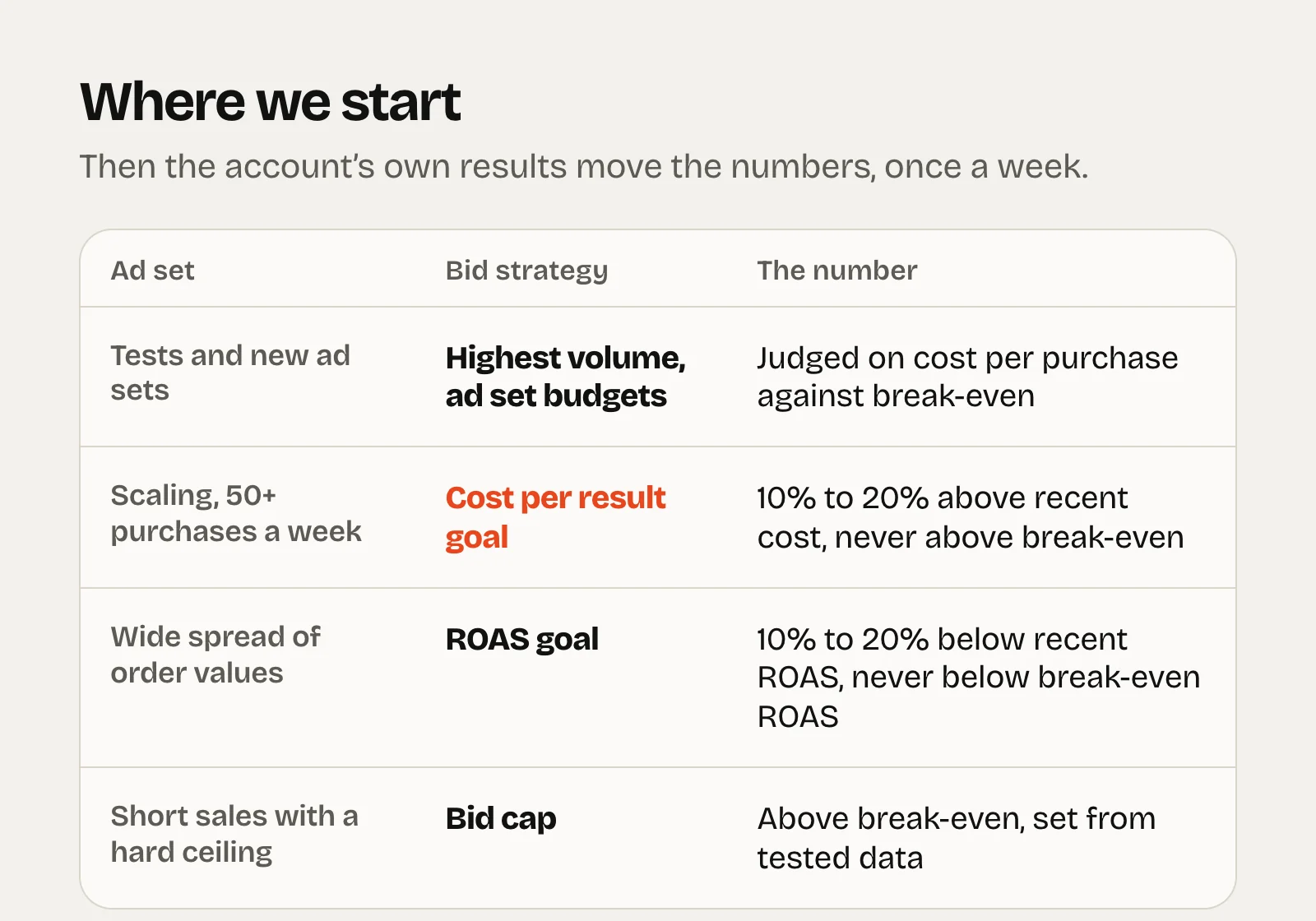
Tests run on highest volume, on ad set budgets, so a cap doesn’t decide which concept gets the spend. We judge them on cost per purchase against break-even. Scaling ad sets that clear 50 purchases a week move to a cost per result goal. Accounts where some baskets are worth far more than others use a ROAS goal on a value-optimised campaign instead. Bid caps stay for short sales with a hard ceiling.
If you want one thing to try this week, open every ad set with a cost goal or bid cap and write three numbers next to it: the cap, the break-even for what it sells, and last week’s spend as a share of budget. A cap above break-even is losing money on purpose. A cap spending under half its budget is set too tight, or sitting on ads that need replacing.
Questions we get asked
Is a cost cap the same as a cost per result goal?
Yes. Meta renamed it. It still sets a target average cost per result, and the old minimum ROAS bid is now called the ROAS goal.
What’s the difference between a cost cap and a bid cap?
A cost cap, now the cost per result goal, aims for an average cost per result across the week, so some auctions get bid higher. A bid cap sets the most Meta can bid in any single auction, which isn’t the cost you see in reporting.
Why isn’t my cost cap spending?
Usually the goal is below what purchases cost in the auction right now, or the ad set has too few conversions to steer. Raise the goal by 5% to 10%, merge ad sets to reach 50 to 100 conversions a week, or add new ads, then wait a week.
Does changing a cost cap reset the learning phase?
Changing bid strategy does. Changing the goal amount can, depending on how big the change is, so small steps once a week are safest.